


Managers Want to Help. They Don't Always Have What They Need.
A thoughtful skills initiative can give employees a clear path to grow. But content and technology can only take it so far. Managers are often the people who help employees connect that learning to their day-to-day work, talk through what comes next, and make development feel worth prioritizing.
That's why supporting managers matters just as much as designing the program itself.
We spoke with three people who have spent their careers helping organizations make learning and development work: an author who has interviewed hundreds of L&D leaders, a talent development consultant, and a learning architect who built AI simulations for Fortune 500 sales teams.
A common theme came through in every conversation: managers generally want to help their people grow. What they don't always have is the time, confidence, tools, or organizational support to make development a consistent part of how they lead.
This playbook is about changing that. It brings together practical ideas for making development easier to prioritize—from incentives and expectations to tools, culture, and conversations with senior leaders. These aren't abstract recommendations. They're approaches our contributors have seen work in real organizations.


%22%20fill-rule%3D%22evenodd%22%20d%3D%22M19%20145L27%20135L29%20135L33%20131L42%20128L96%20128L96%20106L99%2097L107%2087L109%2087L113%2083L122%2080L390%2080L402%2085L411%2094L416%20106L416%20128L470%20128L482%20133L489%20139L496%20154L496%20201L490%20224L486%20232L480%20239L480%20241L475%20245L475%20247L471%20251L469%20251L465%20256L463%20256L462%20258L448%20266L425%20272L408%20272L404%20285L389%20313L386%20315L381%20324L375%20329L375%20331L356%20349L354%20349L351%20353L349%20353L339%20361L320%20371L317%20371L315%20373L312%20373L301%20378L284%20382L272%20383L272%20432L324%20432L329%20434L334%20439L336%20444L335%20455L329%20462L324%20464L188%20464L183%20462L178%20457L176%20452L177%20441L183%20434L188%20432L240%20432L240%20383L218%20380L196%20373L192%20370L189%20370L179%20365L178%20363L163%20355L161%20352L155%20349L150%20343L148%20343L125%20317L110%20291L110%20288L107%20284L103%20272L87%20272L64%20266L56%20262L49%20256L47%20256L43%20251L41%20251L37%20247L37%20245L32%20241L32%20239L26%20232L17%20208L16%20154ZM384%20112L128%20112L129%20244L132%20258L138%20275L145%20289L147%20290L153%20301L156%20303L156%20305L175%20324L177%20324L179%20327L181%20327L191%20335L205%20342L222%20348L245%20352L268%20352L293%20347L317%20337L318%20335L322%20334L323%20332L331%20328L333%20325L335%20325L339%20320L341%20320L356%20304L356%20302L359%20300L359%20298L362%20296L365%20289L367%20288L376%20269L382%20248L384%20234ZM97%20240L96%20160L48%20160L48%20199L55%20218L70%20233L84%20239ZM415%20240L428%20239L442%20233L457%20218L464%20199L464%20160L416%20160Z%22%3E%3C%2Fpath%3E%3Cpath%20fill%3D%22var(--icon-accent%2C%20%23FB5330)%22%20fill-rule%3D%22evenodd%22%20d%3D%22M384%20112L384%20234L382%20248L376%20269L367%20288L365%20289L364%20293L359%20298L359%20300L356%20302L356%20304L341%20320L339%20320L335%20325L333%20325L331%20328L329%20328L322%20334L302%20344L289%20347L286%20349L268%20352L245%20352L222%20348L205%20342L191%20335L190%20333L186%20332L184%20329L179%20327L177%20324L175%20324L156%20305L156%20303L153%20301L153%20299L145%20289L138%20275L132%20258L129%20244L128%20112Z%22%3E%3C%2Fpath%3E%3C%2Fsvg%3E)
Make People Development Part of How Managers Succeed
When development keeps slipping down a manager's list, it usually isn't because they don't care. Managers are balancing team needs, business goals, deadlines, and their own individual responsibilities. If people development isn't reflected in how their role is defined or evaluated, it can be difficult to give it consistent attention.
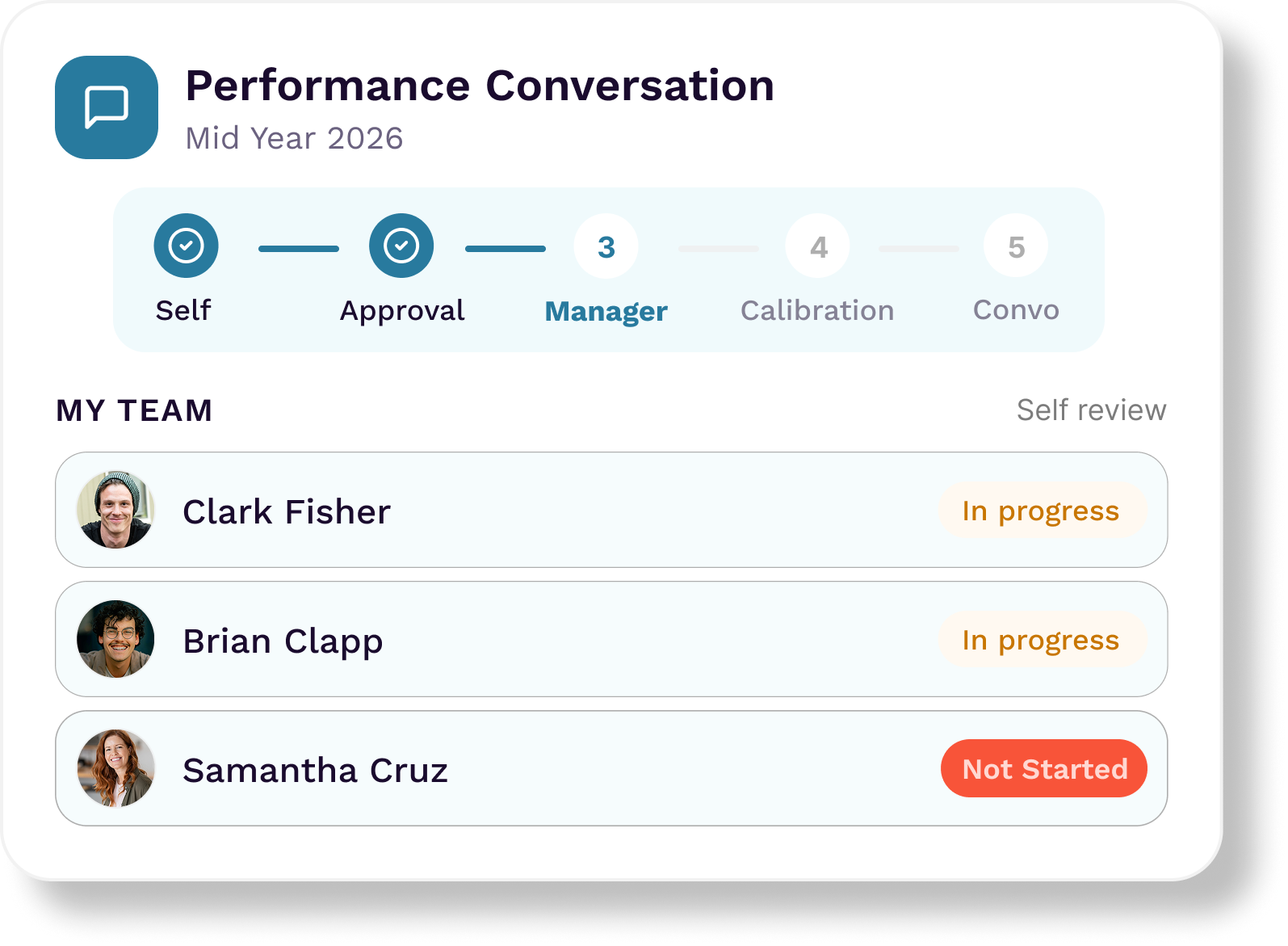
A good place to start is making good people development visible, setting clear expectations, and recognizing the manager behaviors that help employees grow.
Organizations can approach this at three different levels, depending on what fits their culture and current processes.
Level 1) Increase Visibility
This is often the simplest place to begin because it doesn't require a formal policy change.
- Recognize managers in email, Slack, or Teams when their support contributes to an employee promotion, stronger retention, or meaningful skills growth.
- Share examples of a manager's coaching and development efforts with their leader during quarterly conversations.
- Give managers opportunities to share the practices that are working well with their peers.
Level 2) Set Formal Expectations
Once people development is visible, organizations can make it a clearer part of the manager role.
- Include people development in manager job expectations and performance conversations.
- Set a reasonable expectation for the time managers spend coaching and developing their teams. Even 10–15% can signal that this work matters.
- Focus on behaviors that managers can control, such as holding career conversations, maintaining regular 1on1s, and following through on coaching commitments.
Level 3) Connect It to Compensation
For some organizations and roles, people development may also be reflected in variable compensation.
- Tie a portion of variable pay to team outcomes managers can reasonably influence, such as retaining strong performers or helping employees move into new roles internally.
- Use compensation selectively, particularly when developing people is a central and measurable part of the manager's role.
Not every organization needs to move through all three levels. The important thing is to make sure managers can see that developing their people is part of doing their job well, and that the organization sees and values the effort they put into it.

%22%20fill-rule%3D%22evenodd%22%20d%3D%22M390%20416L388%20416L377%20426L375%20426L368%20432L364%20433L363%20435L359%20436L358%20438L335%20449L315%20456L281%20463L241%20464L218%20461L197%20456L177%20449L175%20447L172%20447L154%20438L153%20436L149%20435L148%20433L144%20432L143%20430L135%20426L124%20416L122%20416L97%20391L97%20389L86%20377L86%20375L80%20368L79%20364L77%20363L76%20359L74%20358L63%20335L56%20315L49%20281L48%20241L51%20218L56%20197L63%20177L65%20175L65%20172L74%20154L76%20153L80%20144L82%20143L86%20135L89%20133L89%20131L92%20129L92%20127L104%20115L104%20113L112%20105L114%20105L122%2096L124%2096L135%2086L137%2086L144%2080L148%2079L149%2077L153%2076L154%2074L172%2065L175%2065L177%2063L197%2056L231%2049L270%2048L294%2051L315%2056L327%2060L329%2062L335%2063L356%2073L357%2075L363%2077L364%2079L366%2079L367%2081L371%2082L376%2087L381%2089L389%2097L391%2097L415%20121L415%20123L423%20131L423%20133L435%20149L437%20155L439%20156L449%20177L456%20197L463%20231L464%20270L461%20294L456%20315L449%20335L447%20337L447%20340L438%20358L436%20359L432%20368L430%20369L426%20377L423%20379L423%20381L420%20383L420%20385L408%20397L408%20399L400%20407L398%20407ZM142%20391L144%20391L147%20395L156%20400L158%20403L174%20411L175%20413L205%20425L233%20431L269%20432L291%20429L307%20425L318%20420L321%20420L323%20418L326%20418L344%20409L345%20407L349%20406L350%20404L358%20400L364%20394L366%20394L369%20390L371%20390L390%20371L390%20369L398%20361L398%20359L406%20349L407%20345L409%20344L418%20326L418%20323L420%20321L420%20318L425%20307L431%20279L432%20243L427%20212L414%20177L412%20176L408%20166L406%20165L398%20151L395%20149L395%20147L370%20121L368%20121L365%20117L356%20112L354%20109L338%20101L337%2099L307%2087L279%2081L243%2080L212%2085L209%2087L193%2091L180%2098L175%2099L174%20101L166%20104L165%20106L151%20114L149%20117L147%20117L121%20142L121%20144L117%20147L112%20156L109%20158L100%20176L98%20177L87%20205L81%20233L80%20269L85%20300L98%20335L100%20336L104%20346L106%20347L114%20361L117%20363L117%20365ZM383%20263L377%20270L372%20272L252%20272L247%20270L242%20265L240%20260L240%20140L242%20135L249%20129L260%20128L265%20130L270%20135L272%20140L272%20240L372%20240L377%20242L383%20249Z%22%3E%3C%2Fpath%3E%3Cpath%20fill%3D%22var(--icon-accent%2C%20%23FB5330)%22%20fill-rule%3D%22evenodd%22%20d%3D%22M142%20391L117%20365L117%20363L114%20361L114%20359L104%20346L100%20336L98%20335L85%20300L80%20269L81%20233L87%20205L98%20177L100%20176L109%20158L112%20156L112%20154L121%20144L121%20142L147%20117L149%20117L151%20114L153%20114L166%20104L174%20101L175%2099L180%2098L193%2091L209%2087L212%2085L243%2080L279%2081L307%2087L337%2099L338%20101L346%20104L347%20106L361%20114L363%20117L365%20117L368%20121L370%20121L395%20147L395%20149L398%20151L398%20153L408%20166L412%20176L414%20177L427%20212L432%20243L431%20279L425%20307L420%20318L420%20321L418%20323L418%20326L409%20344L407%20345L406%20349L404%20350L398%20361L390%20369L390%20371L371%20390L369%20390L366%20394L364%20394L362%20397L360%20397L358%20400L356%20400L349%20406L345%20407L344%20409L326%20418L323%20418L321%20420L318%20420L307%20425L291%20429L269%20432L233%20431L205%20425L175%20413L174%20411L166%20408L165%20406L151%20398L149%20395L147%20395L144%20391ZM383%20263L383%20249L377%20242L372%20240L272%20240L272%20140L270%20135L265%20130L260%20128L249%20129L242%20135L240%20140L240%20260L242%20265L247%20270L252%20272L372%20272L377%20270Z%22%3E%3C%2Fpath%3E%3C%2Fsvg%3E)
Give Managers Time to Think, Along With a Starting Point
In one consulting engagement led by Elena Agaragimova, a talent development consultant we spoke to, senior managers were given 15% of their billable hours to focus specifically on developing their teams. It was a meaningful commitment, but the team quickly learned that protecting time was only the first step.
Without a clear purpose for those hours, managers naturally returned to the work already in front of them. As Elena explained:
"We're creatures of habit. Even if you give me three hours free that week, I'm still going to fill it with something else."

The organization added recurring group sessions where managers could talk through specific talent questions together. That structure gave the time a clear purpose while allowing managers to learn from one another, compare approaches, and work through challenges they shared.
It also highlighted another important need: many managers are asked to support employee growth long before they receive formal training on how to lead a development conversation. Protected time becomes much more valuable when managers also have prompts, tools, and examples to help them use it well.
- Put it on the calendar as a recurring session with a clear name and purpose.
- Give each session specific questions to explore, such as: "Who on your team is ready for more responsibility, and what support would help them take the next step?"
- Bring managers together as a peer group so they can exchange ideas and recognize challenges they may have in common.
- Send a short prompt in advance so managers can arrive with a real employee or situation in mind.
Managers don't need hours of additional meetings. They need focused time, a useful question, and a supportive space to think more intentionally about their people.


%22%20fill-rule%3D%22evenodd%22%20d%3D%22M348%2016L359%2017L367%2025L368%2064L404%2064L409%2066L414%2071L416%2076L415%2087L407%2095L368%2096L368%20132L366%20137L361%20142L356%20144L345%20143L337%20135L336%2096L300%2096L295%2094L290%2089L288%2084L289%2073L297%2065L336%2064L336%2028L338%2023L343%2018ZM230%2096L239%2099L240%20101L245%20103L249%20107L255%20118L257%20127L262%20137L264%20146L269%20156L271%20165L273%20167L275%20176L280%20186L291%20219L298%20223L307%20225L309%20227L315%20228L317%20230L326%20232L328%20234L334%20235L336%20237L345%20239L347%20241L353%20242L355%20244L364%20246L366%20248L372%20249L374%20251L383%20253L385%20255L400%20260L411%20270L414%20276L416%20283L416%20293L411%20306L402%20315L394%20319L388%20320L386%20322L380%20323L378%20325L350%20334L348%20336L331%20341L329%20343L312%20348L310%20350L293%20355L290%20359L288%20368L286%20370L281%20387L279%20389L278%20395L276%20397L274%20406L272%20408L271%20414L269%20416L267%20425L265%20427L264%20433L262%20435L260%20444L258%20446L257%20452L255%20454L251%20466L248%20468L246%20472L244%20472L239%20477L230%20480L218%20480L204%20474L194%20461L192%20452L187%20442L185%20433L183%20431L181%20422L176%20412L174%20403L169%20393L157%20357L155%20355L138%20350L136%20348L130%20347L128%20345L111%20340L109%20338L103%20337L101%20335L95%20334L93%20332L84%20330L82%20328L76%20327L74%20325L68%20324L66%20322L60%20321L58%20319L46%20315L44%20312L40%20310L40%20308L37%20306L34%20300L32%20294L32%20282L35%20273L37%20272L39%20267L49%20259L71%20252L81%20247L90%20245L92%20243L101%20241L111%20236L120%20234L130%20229L139%20227L149%20222L155%20221L159%20214L164%20197L166%20195L171%20178L173%20176L174%20170L176%20168L178%20159L180%20157L181%20151L183%20149L185%20140L187%20138L188%20132L190%20130L192%20121L197%20110L203%20103L205%20103L209%2099L218%2096ZM444%20128L455%20129L462%20135L464%20140L464%20160L487%20161L494%20167L496%20172L495%20183L489%20190L484%20192L464%20192L463%20215L457%20222L452%20224L441%20223L434%20217L432%20212L432%20192L409%20191L402%20185L400%20180L401%20169L407%20162L412%20160L432%20160L433%20137L439%20130ZM383%20289L382%20287L379%20287L377%20285L371%20284L369%20282L360%20280L358%20278L352%20277L342%20272L333%20270L323%20265L314%20263L304%20258L279%20250L267%20241L267%20239L264%20237L262%20233L260%20224L255%20214L253%20205L248%20195L246%20186L244%20184L243%20178L241%20176L239%20167L237%20165L225%20130L223%20130L222%20132L220%20141L215%20151L213%20160L211%20162L210%20168L205%20178L203%20187L201%20189L200%20195L198%20197L196%20206L194%20208L185%20235L177%20245L161%20253L152%20255L142%20260L133%20262L131%20264L125%20265L115%20270L106%20272L104%20274L66%20287L66%20289L68%20290L74%20291L76%20293L85%20295L87%20297L93%20298L103%20303L112%20305L122%20310L131%20312L133%20314L171%20327L181%20335L189%20351L191%20360L193%20362L195%20371L197%20373L209%20409L214%20419L216%20428L221%20438L223%20447L225%20446L225%20443L227%20441L228%20435L233%20425L235%20416L240%20406L242%20397L247%20387L249%20378L254%20368L262%20343L271%20331L273%20331L279%20326L288%20324L290%20322L299%20320L309%20315L318%20313L328%20308L337%20306L347%20301Z%22%3E%3C%2Fpath%3E%3Cpath%20fill%3D%22var(--icon-accent%2C%20%23FB5330)%22%20fill-rule%3D%22evenodd%22%20d%3D%22M383%20289L366%20294L364%20296L347%20301L345%20303L328%20308L326%20310L309%20315L307%20317L290%20322L288%20324L279%20326L273%20331L271%20331L262%20343L254%20368L249%20378L247%20387L242%20397L240%20406L235%20416L233%20425L231%20427L225%20446L223%20447L221%20438L219%20436L207%20400L202%20390L200%20381L195%20371L189%20351L181%20335L171%20327L141%20317L131%20312L122%20310L112%20305L103%20303L101%20301L95%20300L85%20295L76%20293L74%20291L68%20290L66%20289L66%20287L96%20277L106%20272L115%20270L117%20268L123%20267L133%20262L142%20260L152%20255L161%20253L177%20245L185%20235L194%20208L196%20206L198%20197L203%20187L205%20178L207%20176L208%20170L213%20160L215%20151L220%20141L222%20132L223%20130L225%20130L237%20165L239%20167L241%20176L246%20186L248%20195L253%20205L255%20214L260%20224L262%20233L264%20237L267%20239L267%20241L279%20250L304%20258L314%20263L323%20265L333%20270L342%20272L344%20274L350%20275L360%20280L369%20282L371%20284L382%20287Z%22%3E%3C%2Fpath%3E%3C%2Fsvg%3E)
Use AI to Help Managers Focus
As AI becomes part of more learning and development programs, there's an opportunity to think beyond what the technology can produce and consider what will actually help a manager support their team.
More information isn't always the answer. The most useful AI tools can identify what matters and turn it into clear guidance a manager can use in their next conversation.

Christopher Lind, a business transformation advisor who has designed AI simulations for Fortune 500 sales teams, described how one team took this approach with an AI-driven sales simulation. After each employee completed a 10-minute practice conversation, the tool created a separate coaching brief for their manager. Instead of presenting every score or data point, it focused on three things: what the employee could work on, why it mattered to the business, and what the manager could do next.
The AI handled the analysis. The manager brought the context, judgment, and human conversation.
- The one or two areas where the employee would benefit most from support, rather than a complete report of everything the tool measured.
- A simple explanation of why those areas matter to the employee, the team, or the business.
- A clear next step the manager can take in a coaching conversation.
- An easy way for managers to provide feedback when the recommendation doesn't match what they're seeing.
When considering a new AI tool, ask a practical question: will this make the manager's next conversation with an employee clearer and more useful? The best tools help managers focus their attention, rather than giving them more information to sort through.

%22%20fill-rule%3D%22evenodd%22%20d%3D%22M421%20457L406%20464L106%20464L97%20461L87%20453L87%20451L83%20447L80%20438L80%2090L83%2081L91%2071L93%2071L97%2067L106%2064L185%2064L199%2050L221%2038L246%2032L266%2032L282%2035L302%2043L303%2045L307%2046L315%2053L317%2053L327%2064L406%2064L418%2069L425%2075L432%2090L432%20438L427%20450ZM192%20128L320%20128L320%20120L316%20104L311%2094L297%2078L295%2078L290%2073L274%2066L264%2064L248%2064L232%2068L222%2073L206%2087L206%2089L203%2091L196%20104L193%20114ZM112%20432L400%20432L400%2096L347%2096L352%20118L352%20148L350%20153L345%20158L340%20160L172%20160L167%20158L162%20153L160%20148L160%20118L165%2096L112%2096ZM336%20236L336%20244L334%20249L329%20254L324%20256L188%20256L183%20254L178%20249L176%20244L176%20236L178%20231L183%20226L188%20224L324%20224L329%20226L334%20231ZM336%20300L336%20308L334%20313L329%20318L324%20320L188%20320L183%20318L178%20313L176%20308L176%20300L178%20295L183%20290L188%20288L324%20288L329%20290L334%20295Z%22%3E%3C%2Fpath%3E%3Cpath%20fill%3D%22var(--icon-accent%2C%20%23FB5330)%22%20fill-rule%3D%22evenodd%22%20d%3D%22M400%20432L112%20432L112%2096L165%2096L160%20118L160%20148L162%20153L167%20158L172%20160L340%20160L345%20158L350%20153L352%20148L352%20118L347%2096L400%2096ZM176%20236L176%20244L178%20249L183%20254L188%20256L324%20256L329%20254L334%20249L336%20244L336%20236L334%20231L329%20226L324%20224L188%20224L183%20226L178%20231ZM176%20300L176%20308L178%20313L183%20318L188%20320L324%20320L329%20318L334%20313L336%20308L336%20300L334%20295L329%20290L324%20288L188%20288L183%20290L178%20295Z%22%3E%3C%2Fpath%3E%3C%2Fsvg%3E)
Give Managers Tools They Can Use Right Away
Even when managers have time and support, they may not know exactly what a good development conversation should sound like. That's understandable. Career conversations, performance concerns, and growth planning each require a slightly different approach—and most managers haven't been taught how to handle every situation.
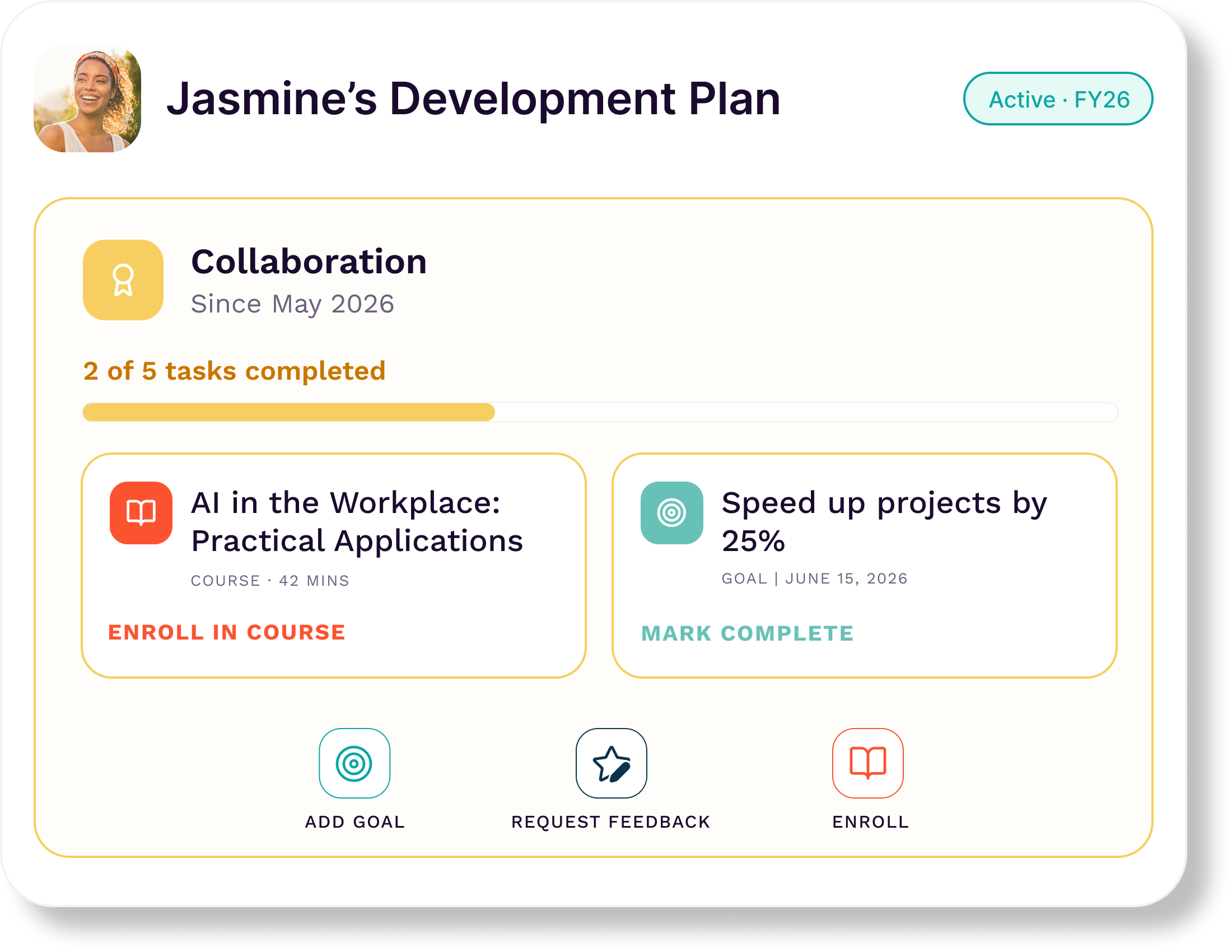
This is where a simple tool can be more helpful than another course on coaching theory. A one-page guide with a few thoughtful talking prompts can give managers the confidence to begin the conversation while still leaving room for them to lead it in their own way.
The support shouldn't end when the resource is shared. Checking back in gives managers a chance to talk about what worked, where they got stuck, and what would make the tool more useful next time.
Here's a guide you can share with your managers, containing:
- Three to five guides tailored to the conversation, whether it's a career check-in, a performance concern, or a growth plan.
- A short list of signals to listen for, such as disengagement, stalled growth, or frustration.
- Simple guidance on what to do when the conversation surfaces something the manager can't address alone, including who to involve and how.
How to Support Follow-Through
- Set a specific check-in date when the resource is shared so managers know when they'll have a chance to discuss it.
- Ask what made the tool easy or difficult to use, and use those answers to improve the next version.
- Share examples of what worked, including the specific manager behavior that made a difference.
The one-pager isn't meant to script every word. It gives managers a useful starting point, especially when they're preparing for a conversation they haven't had before.

%22%20fill-rule%3D%22evenodd%22%20d%3D%22M457%2091L464%20106L463%20362L459%20370L453%20377L438%20384L354%20384L354%20386L358%20389L358%20391L362%20394L362%20396L366%20399L366%20401L370%20404L370%20406L374%20409L374%20411L378%20414L378%20416L382%20419L382%20421L398%20439L400%20444L400%20452L398%20457L393%20462L388%20464L380%20464L375%20462L365%20451L365%20449L361%20446L361%20444L357%20441L357%20439L353%20436L353%20434L349%20431L349%20429L345%20426L345%20424L341%20421L341%20419L337%20416L337%20414L333%20411L333%20409L329%20406L329%20404L325%20401L325%20399L321%20396L321%20394L317%20391L317%20389L313%20386L313%20384L199%20384L199%20386L195%20389L195%20391L191%20394L191%20396L187%20399L187%20401L183%20404L183%20406L179%20409L179%20411L175%20414L175%20416L171%20419L171%20421L167%20424L167%20426L163%20429L163%20431L159%20434L159%20436L155%20439L155%20441L151%20444L151%20446L147%20449L147%20451L137%20462L132%20464L124%20464L119%20462L114%20457L112%20452L113%20441L122%20431L122%20429L126%20426L126%20424L130%20421L130%20419L134%20416L134%20414L138%20411L138%20409L142%20406L142%20404L146%20401L146%20399L150%20396L150%20394L154%20391L154%20389L158%20386L158%20384L74%20384L65%20381L64%20379L59%20377L51%20367L48%20358L48%20106L51%2097L53%2096L55%2091L65%2083L74%2080L240%2080L240%2044L242%2039L247%2034L252%2032L263%2033L271%2041L272%2080L438%2080L450%2085ZM80%20112L80%20352L432%20352L432%20112ZM316%20160L324%20160L329%20162L334%20167L336%20172L336%20292L334%20297L329%20302L324%20304L316%20304L311%20302L306%20297L304%20292L304%20172L306%20167L311%20162ZM252%20192L260%20192L265%20194L270%20199L272%20204L272%20292L270%20297L265%20302L260%20304L252%20304L247%20302L242%20297L240%20292L240%20204L242%20199L247%20194ZM188%20224L196%20224L201%20226L206%20231L208%20236L208%20292L206%20297L201%20302L196%20304L188%20304L183%20302L178%20297L176%20292L176%20236L178%20231L183%20226Z%22%3E%3C%2Fpath%3E%3Cpath%20fill%3D%22var(--icon-accent%2C%20%23FB5330)%22%20fill-rule%3D%22evenodd%22%20d%3D%22M80%20112L432%20112L432%20352L80%20352ZM316%20160L311%20162L306%20167L304%20172L304%20292L306%20297L311%20302L316%20304L324%20304L329%20302L334%20297L336%20292L336%20172L334%20167L329%20162L324%20160ZM252%20192L247%20194L242%20199L240%20204L240%20292L242%20297L247%20302L252%20304L260%20304L265%20302L270%20297L272%20292L272%20204L270%20199L265%20194L260%20192ZM188%20224L183%20226L178%20231L176%20236L176%20292L178%20297L183%20302L188%20304L196%20304L201%20302L206%20297L208%20292L208%20236L206%20231L201%20226L196%20224Z%22%3E%3C%2Fpath%3E%3C%2Fsvg%3E)
Build a Stronger Case With Executives
Senior leaders are often balancing many worthwhile priorities. The clearest way for L&D to earn their attention is to connect a development need to something the organization already cares about, and bring evidence from the people experiencing it firsthand.
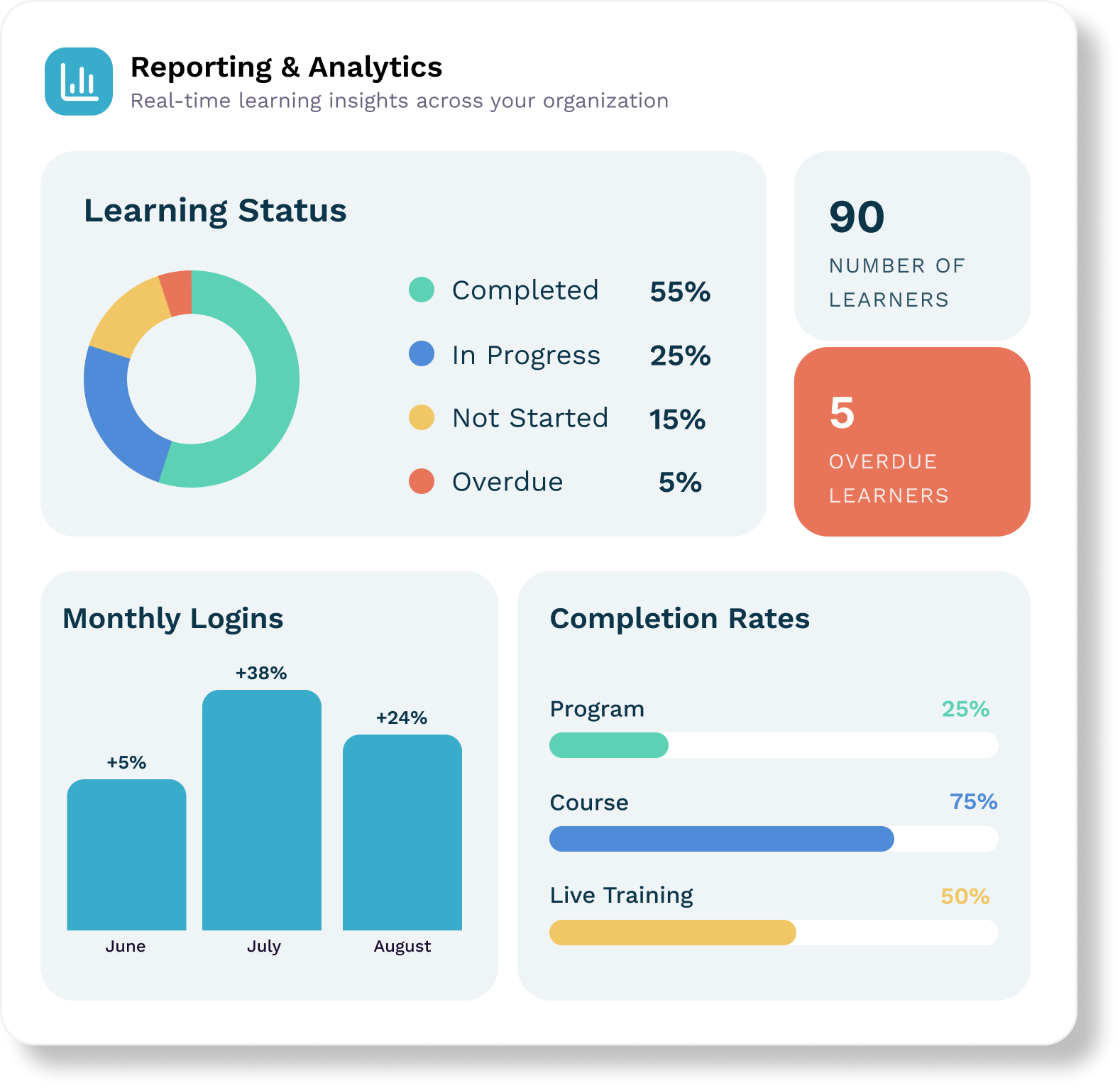
Dr. Nigel Paine, author and co-presenter of Learning Now TV, told us about a head of L&D at a hospital who had heard several times that it wasn't the right moment to focus on people development. Instead of continuing to make the same case, they gathered specific feedback from employees and brought those experiences into the leadership conversation. That evidence helped leaders see the need more clearly and eventually earned L&D a seat at the table.
The same approach can work in conversations with executives and managers: start with what's happening, connect it to the business, and recommend a practical next step.
Instead of: "We ran a training program, and completion reached 92%."
Try"Here's what changed in the way the team handles X, based on feedback from the people who work with them every day."
Instead of: "We need budget for a new leadership program."
Try"Here's a behavior we're seeing that is costing the organization time and money. We'd like to run a small pilot to see whether this approach improves it."
Instead of: "This will improve employee engagement."
Try"We'll review three measures you already track and report back in 90 days on what changed, what didn't, and what we learned."
- Bring two or three specific observations from employees or managers to show what the need looks like in practice.
- Connect the initiative to a business measure the leader already follows.
- Recommend a focused, time-bound pilot with a clear date for reviewing the results.
- Be open about what you'll do if the pilot doesn't produce the expected outcome.
This turns the conversation from a request for support into an opportunity to solve a shared business problem.
"If you ignore people right until the last minute, you will have a disaster."
"People don't like being bad at their jobs. If you show them how they can get better, most people want to get better."
%22%20fill-rule%3D%22evenodd%22%20d%3D%22M23%20302L18%20297L16%20292L16%20284L21%20275L43%20253L45%20253L47%20250L49%20250L51%20247L58%20244L59%20242L73%20236L69%20229L64%20225L64%20223L62%20222L54%20208L48%20185L48%20167L50%20156L58%20136L60%20135L64%20127L69%20123L69%20121L88%20106L108%2098L119%2096L137%2096L148%2098L168%20106L169%20108L177%20112L181%20117L183%20117L198%20136L206%20156L205%20167L197%20175L186%20176L181%20174L176%20169L173%20158L167%20147L154%20135L135%20128L116%20129L102%20135L89%20147L81%20164L80%20183L83%20194L89%20205L99%20215L110%20221L121%20224L132%20224L137%20226L142%20231L144%20236L144%20244L142%20249L137%20254L132%20256L110%20257L84%20265L78%20268L77%20270L73%20271L65%20278L63%20278L59%20283L57%20283L41%20302L36%20304L28%20304ZM489%20302L484%20304L476%20304L471%20302L455%20283L453%20283L445%20275L443%20275L442%20273L428%20265L402%20257L380%20256L375%20254L370%20249L368%20244L368%20236L370%20231L375%20226L380%20224L391%20224L402%20221L413%20215L423%20205L429%20194L432%20183L431%20164L425%20150L413%20137L396%20129L377%20128L366%20131L355%20137L343%20150L339%20158L337%20167L331%20174L326%20176L315%20175L307%20167L306%20156L314%20136L329%20117L331%20117L335%20112L337%20112L344%20106L364%2098L375%2096L393%2096L416%20102L424%20106L431%20112L433%20112L437%20117L439%20117L443%20121L443%20123L448%20127L448%20129L454%20136L462%20156L464%20167L464%20185L458%20208L454%20216L448%20223L448%20225L443%20229L439%20236L461%20247L472%20257L474%20257L491%20275L496%20284L496%20292L494%20297ZM381%20443L373%20448L363%20448L359%20446L354%20441L353%20437L346%20429L346%20427L340%20422L340%20420L323%20405L297%20391L280%20386L267%20384L237%20385L210%20393L195%20401L187%20408L185%20408L181%20413L179%20413L166%20427L166%20429L159%20437L158%20441L153%20446L142%20449L134%20446L130%20442L128%20438L129%20425L138%20413L138%20411L141%20409L141%20407L145%20404L145%20402L160%20387L162%20387L173%20377L187%20370L188%20368L197%20365L197%20363L194%20362L181%20349L181%20347L174%20339L172%20333L170%20332L163%20314L160%20298L161%20271L168%20248L171%20242L173%20241L174%20237L178%20233L178%20231L181%20229L181%20227L195%20213L197%20213L199%20210L209%20205L210%20203L230%20195L246%20192L266%20192L282%20195L304%20204L305%20206L313%20210L315%20213L317%20213L331%20227L331%20229L334%20231L339%20241L341%20242L349%20262L352%20278L352%20298L349%20314L341%20334L339%20335L334%20345L330%20348L330%20350L318%20362L316%20362L315%20365L320%20366L325%20370L331%20372L332%20374L336%20375L337%20377L339%20377L350%20387L352%20387L367%20402L367%20404L371%20407L371%20409L374%20411L374%20413L383%20425L384%20437ZM222%20233L217%20238L215%20238L203%20251L196%20264L193%20274L192%20296L196%20312L201%20322L206%20327L206%20329L219%20341L232%20348L242%20351L264%20352L280%20348L290%20343L295%20338L297%20338L309%20325L316%20312L319%20302L320%20280L316%20264L311%20254L306%20249L306%20247L293%20235L280%20228L270%20225L248%20224L232%20228Z%22%3E%3C%2Fpath%3E%3Cpath%20fill%3D%22var(--icon-accent%2C%20%23FB5330)%22%20fill-rule%3D%22evenodd%22%20d%3D%22M89%20147L102%20135L121%20128L140%20129L157%20137L169%20150L176%20169L183%20175L192%20176L192%20184L188%20200L183%20210L178%20215L178%20217L162%20231L152%20236L144%20238L142%20231L137%20226L132%20224L116%20223L99%20215L87%20202L80%20183L81%20164ZM423%20147L431%20164L432%20183L425%20202L413%20215L396%20223L380%20224L375%20226L370%20231L368%20238L360%20236L350%20231L334%20217L334%20215L331%20213L324%20200L321%20190L320%20176L329%20175L336%20169L343%20150L355%20137L372%20129L391%20128L410%20135ZM290%20233L295%20238L297%20238L309%20251L316%20264L319%20274L320%20296L316%20312L311%20322L306%20327L306%20329L293%20341L280%20348L270%20351L248%20352L232%20348L222%20343L217%20338L215%20338L203%20325L196%20312L193%20302L192%20280L196%20264L201%20254L206%20249L206%20247L219%20235L232%20228L242%20225L264%20224L280%20228Z%22%3E%3C%2Fpath%3E%3C%2Fsvg%3E)
Make Development Part of the Culture
When managers have the time, tools, and support to develop their people, the impact can extend well beyond one learning program.
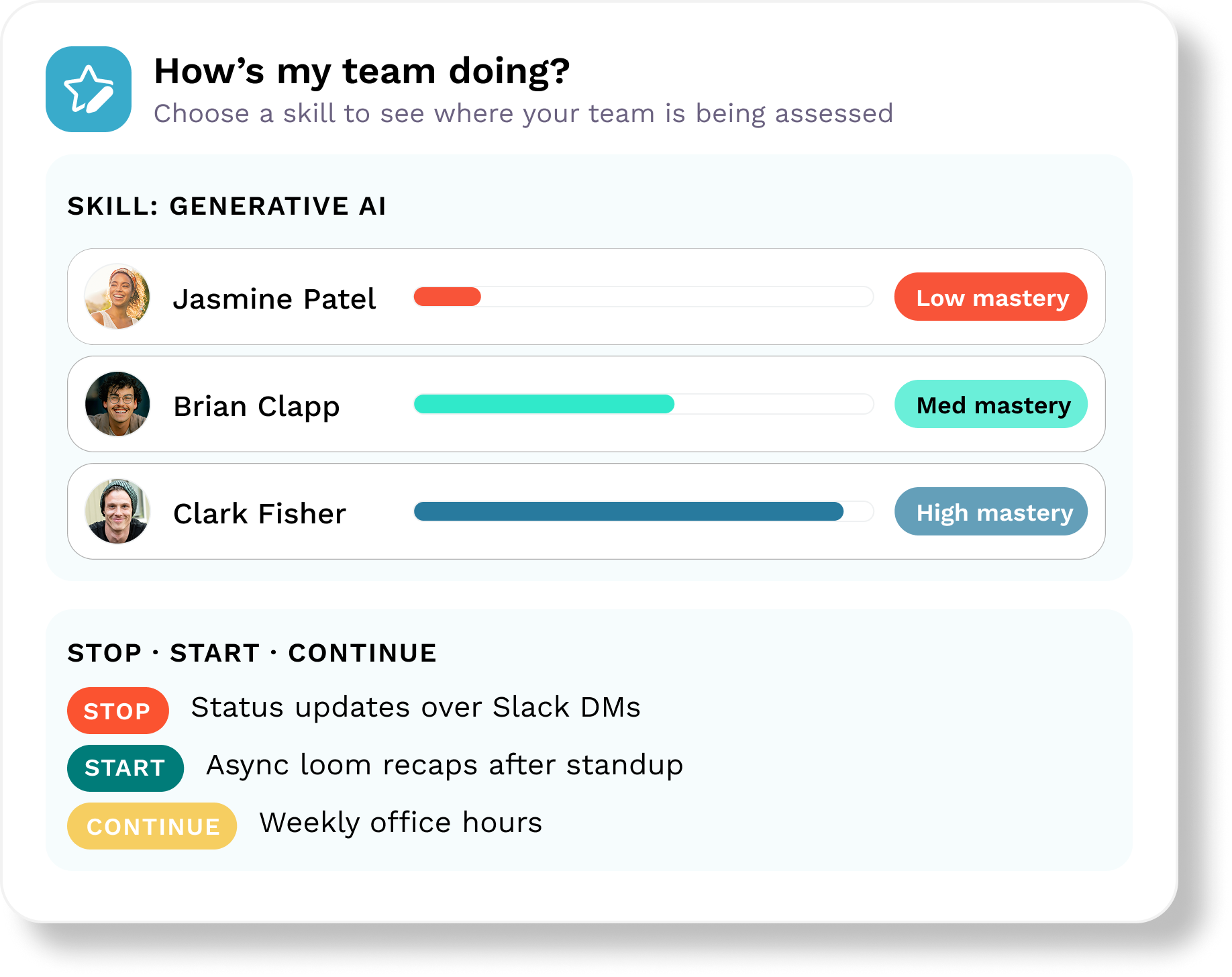
The organization begins to build a shared approach to development. Instead of relying on individual managers to figure it out on their own, good practices become part of how managers lead across the business. That consistency helps preserve valuable knowledge as people change roles or leave the organization.
It can also create stronger connections across teams. When managers have regular opportunities to compare notes, they often discover that another team has already worked through a similar challenge. They can share what they've learned, build on one another's ideas, and spend less time solving the same problems separately.
Senior leaders play an important role in making this feel like part of the organization's culture. When they talk about people development alongside business performance—not only when a new program launches—it reinforces that the two belong together.
- Managers raise development needs and team challenges without waiting for L&D to ask.
- Managers exchange ideas and solve problems across teams.
- Senior leaders include people development in regular business conversations.
- New managers understand from the beginning that developing people is part of their role.
Culture change rarely happens through one large announcement. It takes shape through smaller signals, repeated consistently, until supporting employee growth becomes a familiar part of how the organization works.
Put the Playbook Into Practice
The ideas in this guide don't have to happen all at once. Start with the areas that would make the biggest difference for your managers today, then build from there.
Incentives
- Make managers' people-development efforts visible to their leaders alongside other performance measures.
- Include development behaviors in manager expectations and performance conversations.
- Where it makes sense, connect a portion of variable compensation to team outcomes managers can influence, such as retention and internal mobility.
Time and Tools
- Protect time for managers to think about their people, with a specific question or goal to guide that time.
- Use AI to give managers clear, relevant next steps rather than another report to interpret.
- Create one-page guides for the conversations managers are preparing to have.
- Set a follow-up date when introducing a new resource or expectation so managers know support will continue.
Executive Conversations
- Bring specific observations from employees and managers to show what is happening in the organization.
- Connect the need to a measure leaders already care about and recommend a small, time-bound pilot.
Culture
- Invite senior leaders to model and reinforce the role managers play in employee development.
- Notice when managers begin raising needs, exchanging ideas, and asking for support on their own. Those are early signs the approach is taking hold.

About Bridge: Built for What Happens Next
Every idea in this playbook depends on one thing: getting useful information to the right manager at the moment they need it—without giving them another dashboard to check.
That takes more than training. It takes connected data, which is why Bridge was built to be more than an LMS.
Bridge connects your learning, people, systems, and AI so insights don't get stuck in one place. They reach the people who can actually do something with them. For example, the AI-generated coaching brief from Part Three could arrive directly in a manager's inbox, focused on the one action they should take next. The signals from Part One can come from your HR and business systems, so managers see information that reflects the goals their leaders are already tracking.
Bridge brings content creation, learning delivery, and skills tracking together in one platform. More importantly, it connects learning with performance, helping teams turn what they know into what they do next.
That gives the ideas throughout this playbook—time, incentives, evidence, and follow-through—a system behind them. Managers still lead the conversations, but they don't have to rely on memory or piece together information from multiple places.
If these six moves are the strategy, Bridge helps make them easier to put into practice.