Looking to level up your managers? Manager training initiatives aren’t easy. But done right, they can reap incredible results for your organization. We chat to Elena Agaragimova, a recognized talent development strategist with over 15 years of global experience across corporate learning and talent strategy, to bring you practical tips on upskilling programs for your managers. So you can empower them to drive growth across your teams.
Protect Managers' Development Time and Hold Them Accountable
Managers often operate in constant motion—back-to-back meetings, constant task-switching, and little time to think critically. “[Managers are] spending so many hours in meetings that they just don't have the space to think,” Elena says. This is why carving out development time is often the first step in leveling up your organization’s managers.
She would urge L&D and HR professionals to step in and create and safeguard this time for managers. Ensure that specific chunks of time are carved out and protected as their professional development time, rather than another hour in the week when they’re supporting reports or working through daily tasks.
It’s important to follow up on how that time is used. “Create that space for them and also keep them accountable to keep that space,” Elena says. Often, managers fill L&D time with business-as-usual tasks to keep driving organization targets forward. “They would just still fill that space because they're so used to doing and executing that they don't know how to have the space and use it effectively to think and to strategize,” she explains.
“The biggest thing is to keep them accountable.” If your organization is serious about moving the needle, managers need to understand that there is a clear expectation that they must use their development time for its purpose. L&D can’t simply hand out resources and just hope managers use them either. “There needs to be follow-up and structure,” Elena explains.
Giving managers clear targets, achievable goalposts, and ensuring that there’s frequent follow up can help them keep their development on track.
“The manager needs the same amount of attention that you expect the manager to give to their employees,” Elena says.
Helping managers hold the line and dedicate time to their development might not be easy. Both leadership and managers may initially perceive learning initiatives as time-wasters. This is where strategic cross-functional communication comes in.
“It is a lot of heavy lifting and hand holding in the beginning,” Elena admits. “But long-term it pays off because long-term you will see that that manager is doing a lot more strategic work, versus [being] on the ground trying to fight fires.” Focusing on this kind of business-focused benefit can help you move the conversation forward.
Top Tip: Managers often have a tendency to “fill the space” with daily fires instead of strategic growth. To prevent this, leaders can incorporate development into their 1:1 agenda: For example, consistently asking “What was the #1 takeaway from your protected development time this week, and how will it change your strategy?” each week will establish that strategic thinking is a structured expectation.
Show Managers What Good Looks Like
Even the most experienced managers may struggle with the nuances of effective performance and development conversations. Even when they have natural leadership skills, they may not understand what good management should look like in the specific context of your organization. “What does a good conversation when it comes to talent development look like? What does a good conversation about performance look like?” Elena asks.
Give clear examples of success and don't be afraid to say what they should avoid. And get specific. When there’s a lack of shared understanding of good, you risk managers not living up to their potential or settling for just good enough. “What are the symptoms of poor performance [and] good performance? How do you recognize it? How does [it] show up? How do you recognize burnout in your team members?” Elena challenges.
Helping managers recognize these workplace signals is what separates reactive management from empowered leadership.
To bridge that gap, Elena’s team focuses on practical, ready-to-use tools. “We create one-pager cheat sheets that managers can use in their next conversation—step-by-step checklists complete with prompts and guidelines.” These cheat sheets give managers something tangible to follow, transforming abstract skills like coaching and feedback into repeatable habits. The goal isn’t to script conversations to the T, but to give managers the words and structure to lead better performance dialogues.
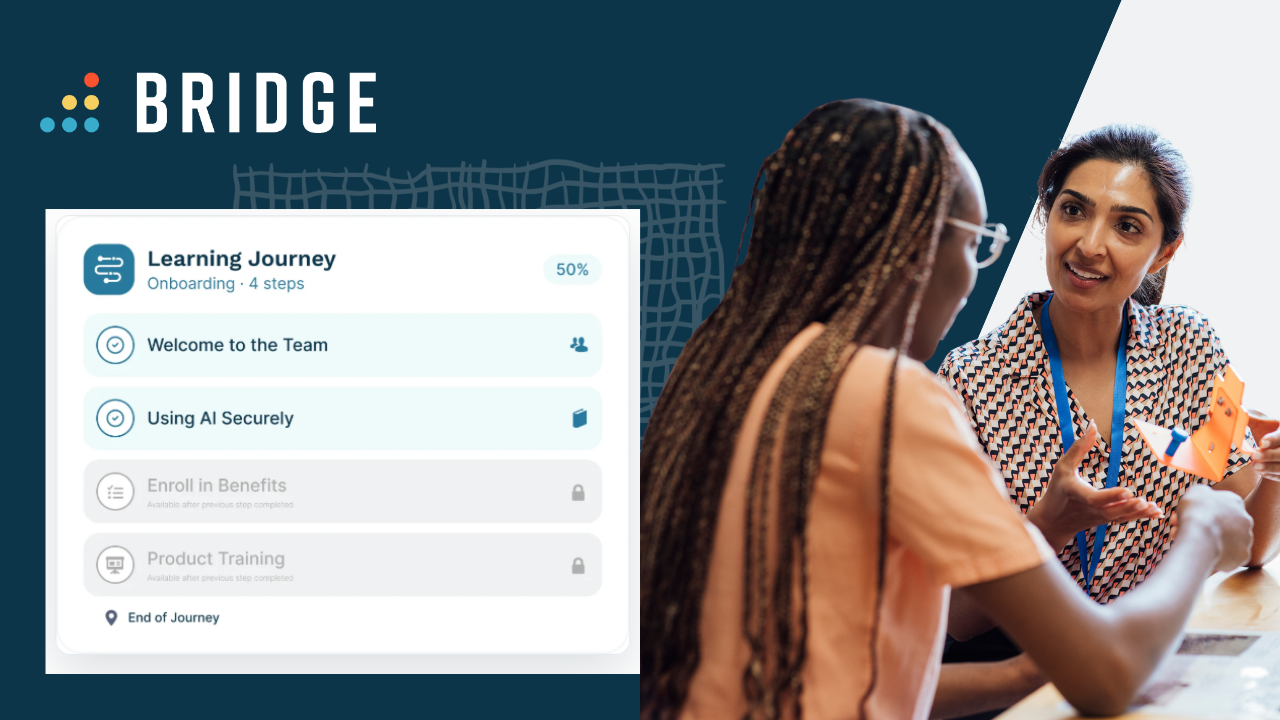
Top Tip: In Bridge, you can add structured checklists and prompts for managers to use. Managers can also incorporate these into their routine 1:1 agendas with direct reports.
Reframe Training Mandates for Existing Managers
When it comes to training existing managers, the change to business-as-usual can be challenging. “When you talk about existing managers, one of the challenges is that [L&D] usually tries to change something.” For managers who spent years leading in a particular way, new approaches to development can feel disruptive or even unnecessary.
Elena explains: “Let’s say existing managers have worked with an organization for a number of years [...] and now you want to introduce this new kind of development plan. They’ve never had to care or had to be forced to do the development for employees or be involved in the process. All of a sudden, you’re putting this new thing in their face, and it can cause a lot of disruption because they’re not used to it.”
She stresses the importance of clear communication and leadership alignment from the outset. “The way I approach this is making sure [..] somebody from senior leadership explains why we’re doing this [training] and sets the expectation. That needs to come from the top.”
When the message comes from HR alone, it can feel like another administrative task. “Usually it comes from HR and the manager is like, ‘another thing HR wants me to do.’ [But] if it comes from leadership, that sounds a little bit different. You need the buy-in from the leadership.” Senior voices set the tone and signal that development expectations aren’t optional.
Elena also stresses how important it is to understand the time constraints managers deal with and to give them the tools they need to overcome them. “How can you make it easier for the manager to do what you need them to do?” she asks. Managers are often overwhelmed and overworked and feel that they don’t have time for anything. “Part of it could be delegation [or a] time management issue, but a part of it is that they don't have space. There’s not a system set up for them to create the space to think about their talent development, [or] about the talent development of their team members.”
Giving them practical advice and helping them reframe their own development as a priority can help. Communicate clearly, simplify the process, and provide tools that lighten rather than add to a manager’s load. “Communicate to them! Do they understand what resources make it easier for them? [...] Talk to them about what will make it easier for them to implement [what they’ve learned] in their teams.”
Encouraging delegation is also essential. “[Help] them understand that if they’re able to drive their team performance further, they can then grow because a manager cannot grow without [being] able to delegate things to their team. Nobody grows if one person is just doing everything. Then it’s called ‘burnout.’”
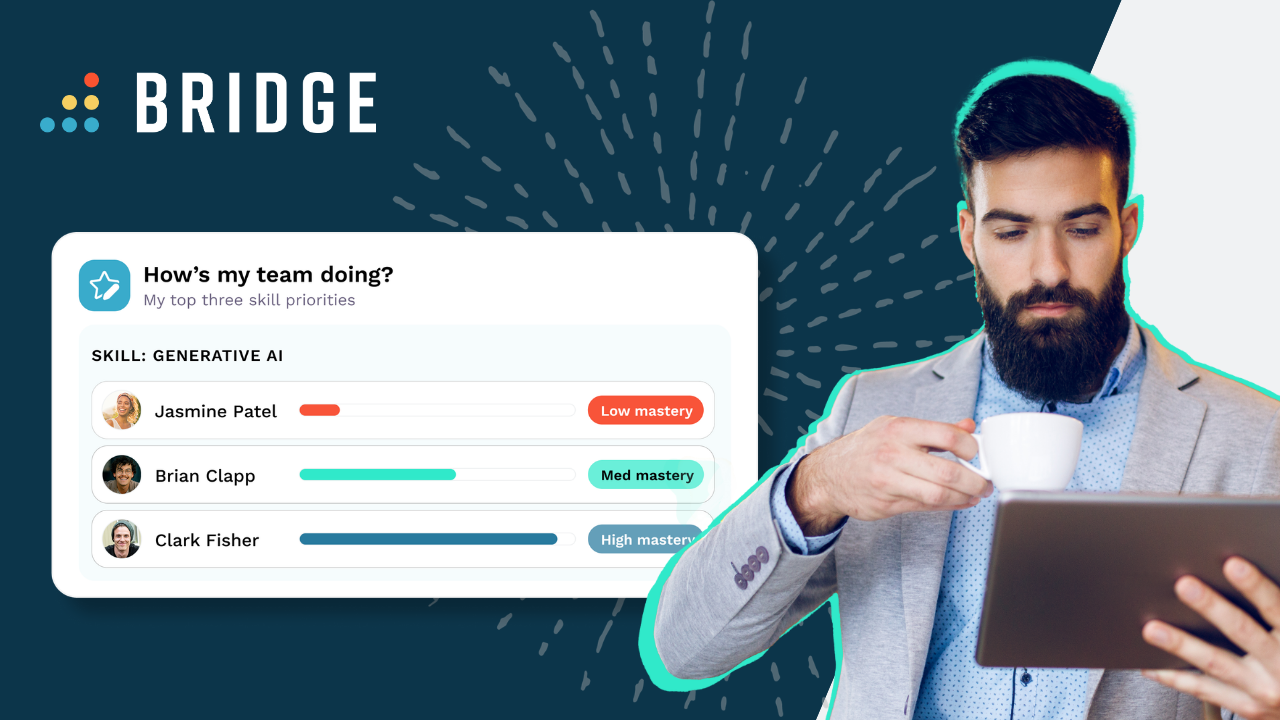
Top Tip: In Bridge, managers are empowered to take a direct role in their team’s growth through the Manager Role, which is designed to provide visibility of their team’s learning. Depending on the permissions you set, managers can even manage courses, programs, and live training sessions for their teams.
Transform Your Managers With Bridge
Bridge LMS empowers your leaders to take a direct, visible role in their team's growth, allowing them to manage courses, programs, and live training sessions. By providing structured 1on1s, integrated feedback tools, and fully customizable performance review templates, Bridge gives your managers the necessary framework to translate new skills into daily practice, ensuring they have the space and structure to think strategically and delegate effectively.
Ready to stop handing out resources and hoping for the best? See how Bridge empowers every manager to become a driver of long-term organizational growth.