
How to Conduct a Skills Gap Analysis
What Is a Skills Gap Analysis?
A skills gap analysis compares the skills your employees have with the ones they need to perform in their roles and achieve business goals.
Conducting a skills gap analysis shows you where to focus training, mentoring, hiring, and internal mobility so your organization is ready for what’s next.
Check out this guide for your step-by-step approach to skills planning, and get your free template.
How to Conduct a Skills Gap Analysis
1. Determine the Focus of Your Analysis
First, identify the scope of your analysis:
- Individual: A role-specific analysis focuses on an employee’s skills to determine whether they have what they need for their current or future role.
- Team- or project-based: A broader analysis evaluates whether a group has the collective skills to achieve a task or goal or meet an upcoming challenge.
- Organization: After assessing your organization’s skills inventory, compare your current capabilities against broader business objectives and future strategic goals. This approach helps you identify gaps that could affect performance.
2. Establish the Required Skills
Next, you want to know what skills and competencies your people need to perform. Drawing on internal and external sources of information can help determine current skills requirements and the ones your organization will need to remain competitive in the future.
This information can be drawn from several different sources, including:
- Job descriptions and previous skills gap analyses
- Manager input
- Competency frameworks
- Externally published skills taxonomies
- Company strategy and goals
- Industry trends and reports
“All of our employees create a development plan within Bridge. What I really like about Bridge is that it’s easy to connect these development plans and these skills that people want to work on to our whole library of more than 200 courses”
— Tom de Haas, Learning & Development Manager, Adwise
3. Measure Employee Skills
Once you know which skills you’re evaluating, you’ll need evidence to show how employees, teams, and/or your entire business stack up against them. Measuring employees’ current skill sets gives you a baseline and shows any skill gaps.
You can find this information from several sources:
- Reviewing L&D assessments
- Conducting self-assessment surveys
- Holding workshops with a skill-gauging component
- Collecting skill feedback from managers and peers
- Gathering data from performance reviews and talent reviews
We are capturing skill data through development plans, skill communities and profiles. Now we’re using that data to see where our people want to grow and what we as a company need to grow and doing a gap analysis. So people know that if I’m growing, no matter what type of growth that is, it actually impacts the organization.
— Dalice Cossey, Culture and Engagement Specialist at Hato Hone St John
4. Fill Skills Gaps
You need a strategy to fill any skills gaps you find. A good starting point is prioritizing skills gaps based on current and future business goals and demand. Your strategy for filling skills gaps might include:
- Training and development programs
- Mentorship and coaching
- Internal mobility
“I love using Bridge. It’s a great tool that helps both experienced leaders and those new to skills development by providing an easy interface and an easy tool to use. It’s not just about managing the tool, it’s about managing the talent that the tool represents.”
— Stephen Davis, VP of Talent Development, ArchKey
Download Your Skills Gap Analysis Template
Get your skills gap analysis template PDF for your step-by-step approach to skills planning, and learn how to:
- Identify current and future needs.
- Evaluate employee skill sets.
- Implement actionable upskilling and reskilling strategies.
How to Use Bridge’s Skills Gap Analysis Template
1. Role and Skill Identification: List each role you want to analyze, then identify the skills associated with that role.
2. Skills Assessment: Gather proficiency levels (1 = low, 5 = high) for each skill, using multiple data sources to ensure a more accurate measurement.
3. Skills Gap Identification: Analyze current skills assessment data and compare it to your organization’s needs and required skills. This process will reveal skills gaps and highlight areas to prioritize for training and development (1 = low, 5 = high).
4. Action Planning: Detail the next steps you’ll take to address any skills gaps.
Stay Ahead of Skills Gaps With Bridge LMS
Assessing employee skills isn’t a one-time activity, and incorporating skills gap analyses into your talent strategy leads to long-term success. Bridge LMS can automate this process for your organization, making it easier to build skills without much administrative overhead.
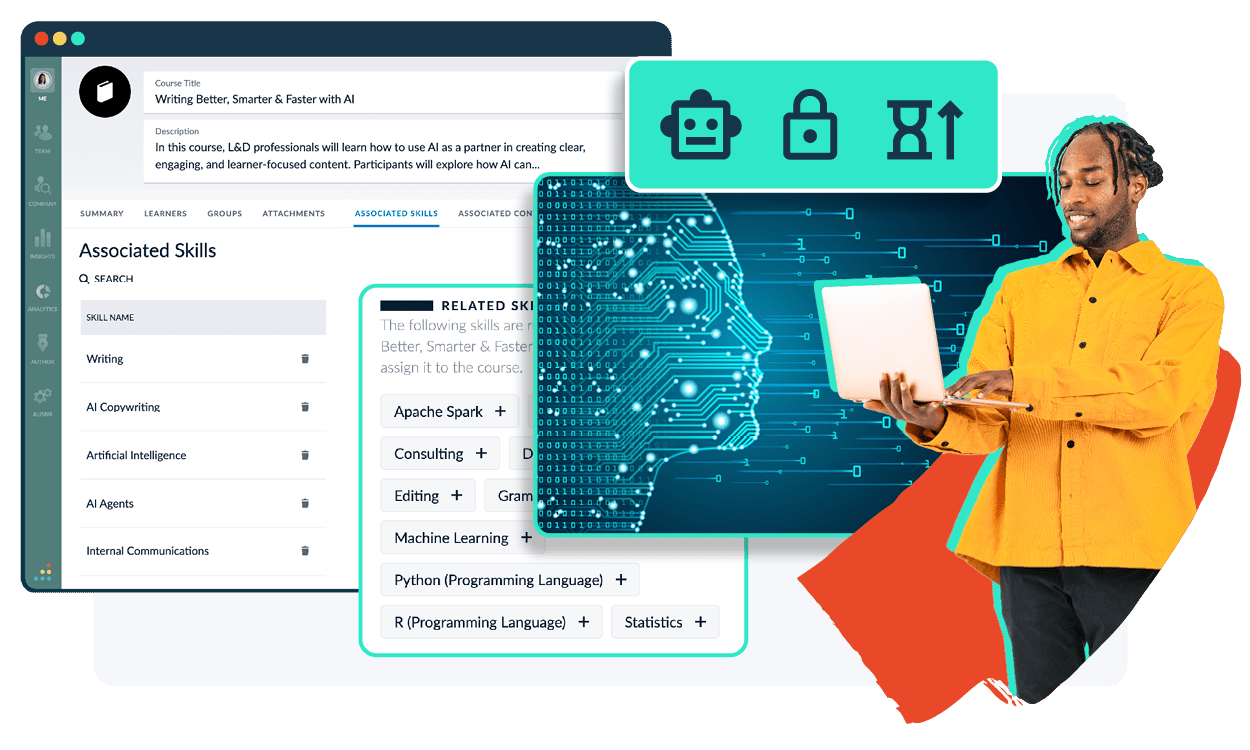
With access to a database of over 32,000 skills from Lightcast, a leader in labor market data, you can quickly identify the skills your employees should have based on their job titles and find where gaps exist. Then you can make these insights actionable by connecting learning to skills management through content tagging, giving employees ownership of their growth, and accessing organization-wide L&D data
Frequently Asked Questions
What is a skills gap analysis template?
A skills gap analysis template compares your employees’ skills and proficiency levels with what they need to succeed in their roles.
Why should I capture proficiency levels in a skills gap analysis?
It’s not enough to know that an employee has a skill. Many roles share skills but require different proficiency levels. Capturing the expected proficiency level for each role and employees’ current proficiency levels shows you who has a skill and how well they can perform it.
What should I include in a skills gap analysis template?
If you create a template from scratch, you should include the following fields:
- Employee name and job title.
- Core skills and competencies required for the role.
- Current skill level (1-5 scale) rating where the employee is today (e.g., novice to expert).
- Required skill level (1-5 scale) defining the target level of proficiency needed to meet company objectives.
- The skills gap: the calculated difference between the current and required skills.
- Priority (high, medium, or low).
- The action plan and solution (e.g., training, mentoring, or hiring).
Why conduct a skills gap analysis?
Assessing employee skills gives you valuable insights that can help you make more informed decisions. Some of the benefits include workforce visibility, connecting training with business goals, and improving retention and engagement through career development.
Can I track skills gaps in an LMS?
Yes. Bridge’s skills management software is connected to learning and employee development. Within the LMS, HR and L&D teams can map workforce skills, build personalized career paths, and close skills gaps through training.