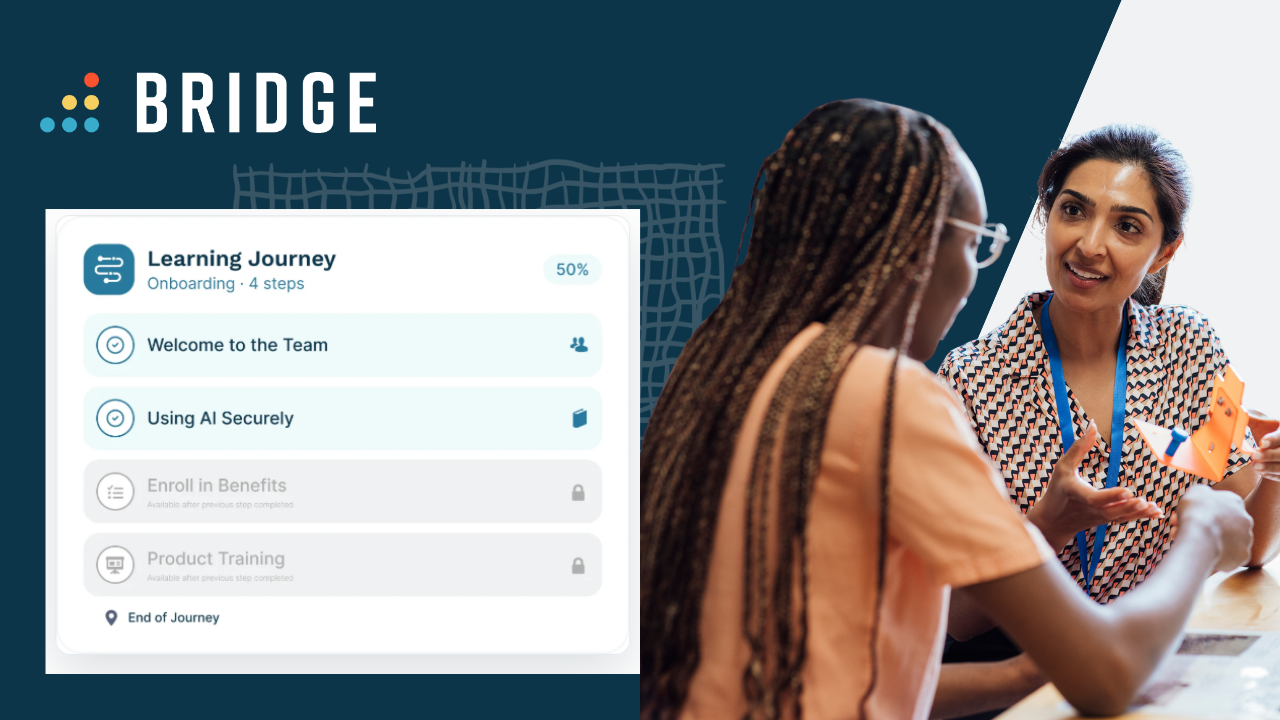
Continuous learning is a necessity, not an option—but not all businesses or employees take this seriously. While organizations need to provide opportunities for ongoing learning and development both via their learning management system and via traditional face-to-face means, enabling employees to take ownership of their learning and growth helps “future-proof them and their employers.” Research by Bersin also shows that companies that nurture their employees’ desire to learn are “30 percent more likely to be market leaders in their industries over an extended period of time.”
Taking control of their own learning experiences allows employees to personalize their own professional development and learn more effectively and efficiently. But how do employers help empower their employees to take ownership?
Motivating Learners to Take the Lead
When employees have the opportunity to learn at their own pace and within their schedules, they’re more motivated to take the lead on their learning journeys. And employees are also more likely to own their learning and development when there are clear benefits for them: more potential for advancement, making their job easier, opportunities to take on more creative projects, and more.
That being said, by embedding continuous learning into company cultures, managers can help employees view learning as an opportunity for continuous growth instead of merely a path to promotion.
Employees Who Own Learning are More Engaged
According to PwC, employees who feel fulfilled at work, that is, a sense of purpose and meaning from strong alignment between their work and motivation, are more engaged. What makes for a fulfilling work experience? PwC identifies three characteristics:
- Relationships – having a sense of belonging and connection
- Impact – progress toward goals they believe in
- Growth – overcoming challenges, learning—with room for failure—and improving
Allowing employees to own their growth helps fuel their fulfillment at work, and organizations can help support their employees with learning opportunities while still empowering them to take the lead.
From the Top Down: Leading by Example
The way leaders behave heavily influences their teams’ own performance and behaviors. So in order to help inspire self-direction and motivate employees to be curious about learning, leaders need to get vulnerable and demonstrate how they learn on their own.
When leaders show that they are committed to taking on new skills or tasks outside their comfort zones, failing, and improving, employees can feel more empowered to take ownership of their learning journeys.