
Give Everyone on Your Team a Career Path
Are internal mobility and succession readiness stalling at your organization?
Empower your people with career pathways and training programs, with Bridge, the skills and career platform that helps you stay ahead of the curve.
What Kind of Companies Need Career Pathing?
- Mid-market and enterprise level orgs
- Companies prioritizing upskilling versus hiring externally
- Companies with high turnover
- Industries with AI disruption
What Does Career Pathing Impact?
- Skills-based talent decisions
- Internal mobility
- Succession planning
- Talent acquisition costs such as onboarding new hires
What Can Career Pathing Achieve?
- Skyrocket engagement
- Improve skills visibility
- Boost retention
What is Career Pathing
Career pathing is an organization-wide strategy that entails mapping roles to employee skills and experiences required at each level, then comparing those to each employee’s current skills profile. This process provides people with clear career tracks and development paths that help them grow into future roles, which can cut staff attrition and nurture tomorrow’s most crucial skills.
Why Career Pathing Matters
Your people want clear career tracks and development paths that help them grow into future roles. 60% of turnover is voluntary and 18% of that voluntary turnover is directly attributed to a lack of growth opportunities. As roles evolve faster due to AI and market change, organizations need better visibility into workforce skills and readiness. With a good career pathing strategy focussed on employee development, you can cut disruption from talented people leaving and nurture tomorrow’s most crucial skills today.
“Bridge has made it so much easier to track performance and create career development programs to support promotions.”
— Priscilla McCraw, Director of Training and Employee Development, Goodwill of Southern Arizona
Key Tips For Launching a Career Pathing Program
Ensure consistency: Operate from a standardized skills taxonomy and make sure strategic career pathing is linked to your HRIS, so outcomes across the org are clear.
Empower managers: Support leaders with insights from labor market data related to job titles, trending skills and future roles. Give leaders visibility into skill growth, future role readiness, and skill validation so they can confidently guide employee development.
Track growth: Track skill proficiency growth over time so managers and employees can clearly see progress toward future roles.
Reduce manual admin: Use an AI-powered LMS like Bridge to automatically recommend courses that can close skills gaps.
Connect employees: Offer community and mentorship opportunities so others feel invested in the company’s collective growth.
Prove ROI: Track career path adherence as well as outcomes like skills improvements and relevant business outcomes.
How to Build a Strong Career Pathing Strategy with Bridge
Having a shared skills language keeps career paths consistent across roles. A skills taxonomy—a list of skills connected to job titles—will help you identify the skills your org requires today and in the future.
Trying to build a skills taxonomy manually is more trouble than it’s worth. Needs change fast. To stay ready to pivot, today’s mid-market orgs need up-to-date labor market data and automatic skills tagging.
Bridge gives you access to a dynamic database of skills automatically mapped to roles across your org. It also empowers you to create career track frameworks to visualize employees’ career progression within a department or function and use a proficiency based skill framework to define what success looks like in each role.
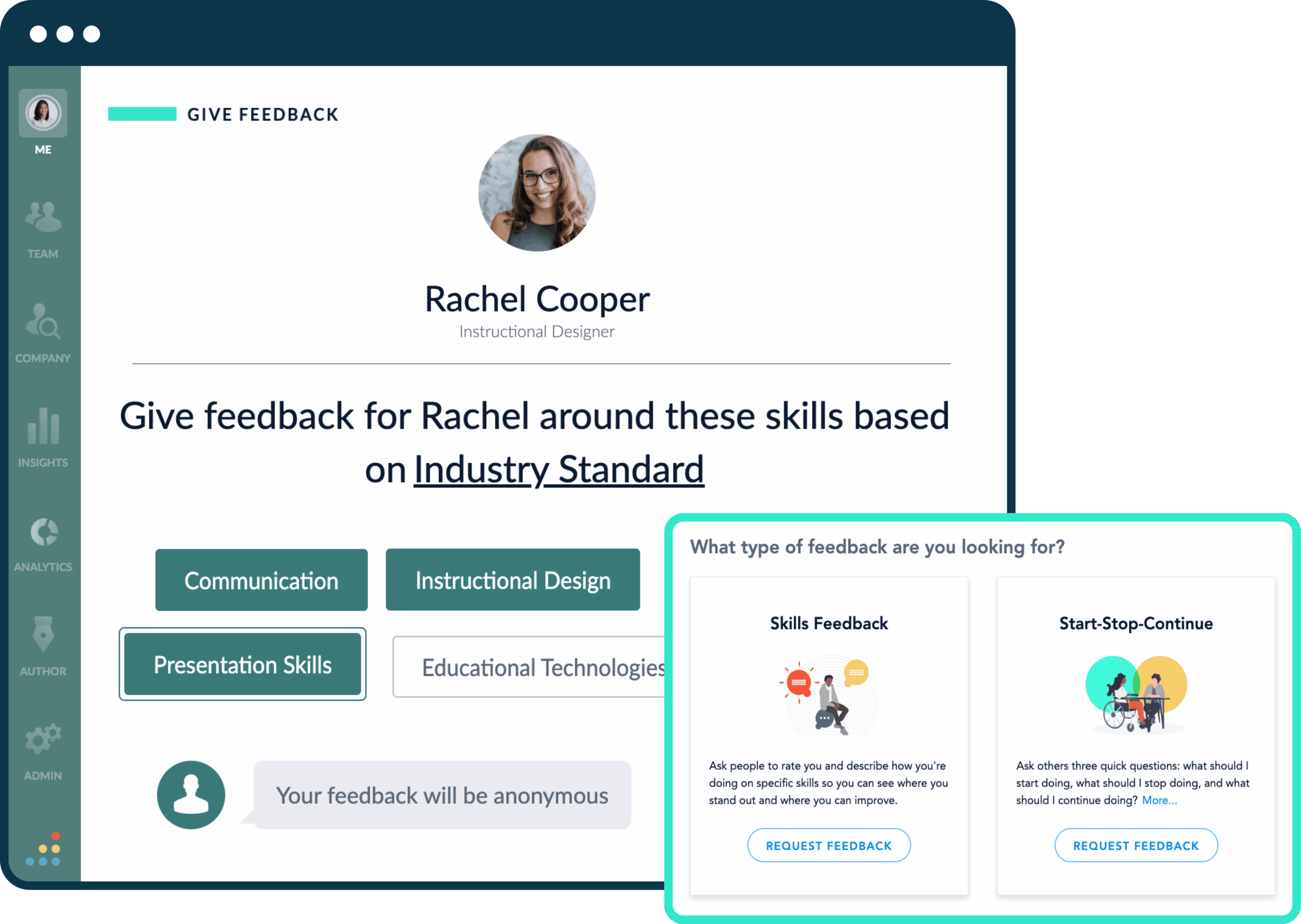
Career pathing works best when employees are motivated and engaged. Ensure structured career conversations and skills feedback are built into manager/employee conversations so people can share what drives them, where they want to grow, and what types of moves make sense.
Bridge brings performance and learning together into one platform. Managers have a holistic view of every report and can easily keep careers on track with built-in feedback tools, career vision prompts, structured 1on1 conversations and performance reviews. They can also validate skills, which helps to align employees and leaders on where strengths exist and where development is still needed.
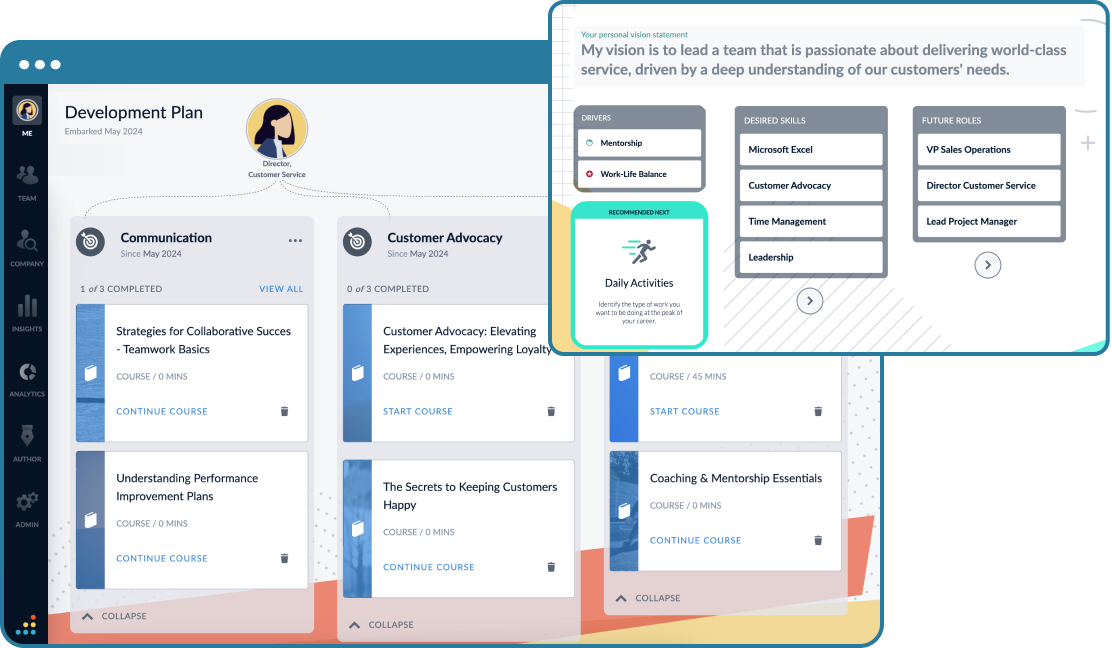
Once managers and reports are aligned, help employees take the reins of their own careers with targeted employee development plans. Translate each employee’s career path into a clear, trackable plan that sets goals and skills improvements along timelines.
With Bridge, development plans are always highly targeted to every individual specific needs. Employees clearly understand which skills to focus on developing, managers gain more structure and confidence in coaching conversations. Development plans are tied to measurable skill growth—not just completed tasks. Staged goals and targets keep engagement high, while automatic course recommendations cut admin work.
Top-down directives can disengage employees. Instead, offer opportunities for people to learn from each other through collaboration, feedback, and shared expertise.
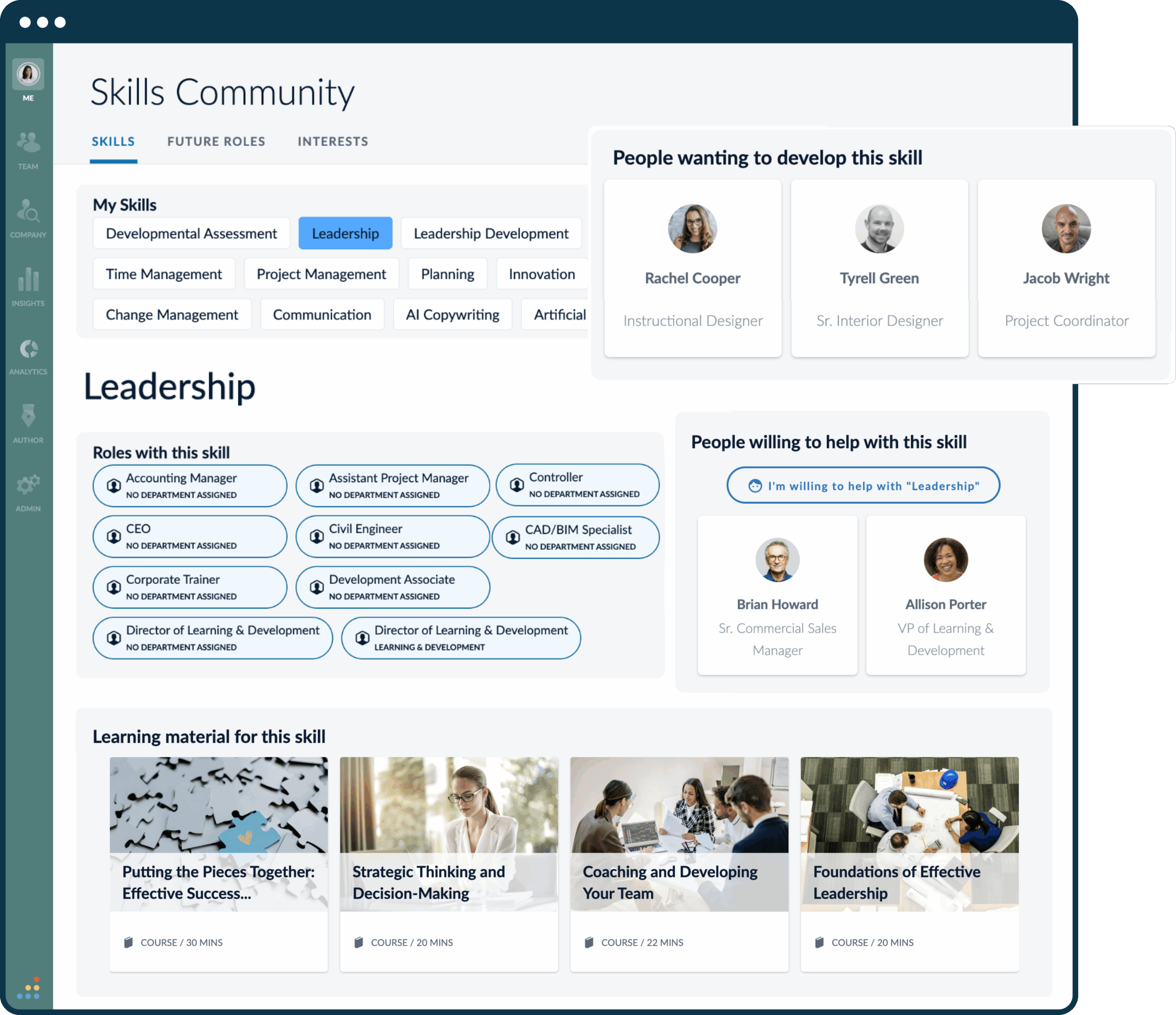
With Bridge, you can easily connect employees who share similar skills or interests—right inside the platform. Mentorship suggestions pair employees with peers or leaders who can support their development.
Bridge Frequently Asked Questions
Can simply offering more courses be enough to support effective career pathing?
No. Career pathing is about answering questions like ‘who can grow into which role that matters to the business?’ Not just giving employees more content to consume. Career pathing is beneficial to both the employee and the organization. Done right, it helps leaders track how people upskill over time and predict which skills will be necessary for the future. Simply expanding your course library will not achieve the organization-wide outcomes that increased skills visibility can offer. Courses only add value when they’re clearly linked to specific skills, roles, and milestones on an employee’s career path—and when these are aligned to the organization’s targets.
Why is career pathing important for internal mobility?
The average cost of replacing an employee is about 50% of their salary. Career pathing shows employees how they can move laterally or upward into new roles instead of looking elsewhere. By using career paths to guide internal moves, you grow existing talent with a clear way forward. Engagement also tends to increase with clear career pathing, making it more likely for employees to be eligible for and respond to internal vacancies. When employees feel that the business cares about their careers, not just about the bottom line, they work with more drive and purpose and seek out internal opportunities for growth.
How does Bridge help learners discover the right course at the right time to grow their careers?
It couldn’t be easier! Bridge helps organizations improve learning discoverability with AI-generated course descriptions, titles, and suggested skills that make content easier to find and aligned to workforce needs.
Can career pathing in Bridge help show who can grow into which role?
Yes. In Bridge, you can easily map roles to the skills and experiences required at each level, then compare those to each employee’s current skills profile. This makes it easier to see who’s ready for a new challenge now, who could be ready next, and what targeted development is needed to help employees move along their growth path.
Does career pathing features in Bridge reveal capability gaps?
Yes. Bridge uses career pathing features to compare the skills and experiences required for a role with the skills employees actually have, making gaps visible.
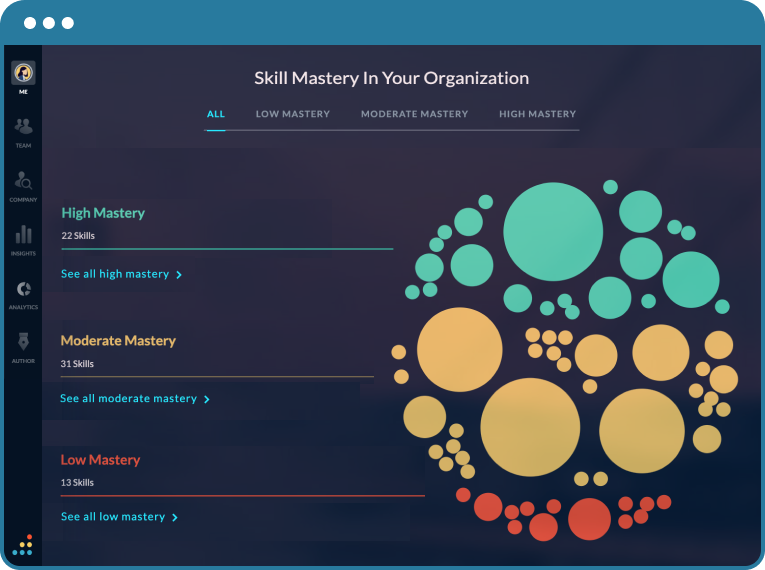
Bridge also uses engaging visuals to help you understand skills mastery across your organization. This helps you understand where your teams are strong, where they’re missing critical capabilities, and which targeted learning or internal moves can close those gaps over time.
How do performance reviews function within Bridge to support employee development?
Bridge integrates performance and learning into a seamless talent story, allowing managers to have a holistic view of their report and keep growth on track all through their tenure. Managers can easily validate employee skill growth and development progress, helping create more meaningful career conversations and clearer readiness signals. Bridge provides built-in feedback tools, career vision prompts, and structured 1-on-1 conversations. Plus, 9-Box talent review tools gives managers a comprehensive view of talent and makes finding and filling skills gaps easy.
How does career pathing in Bridge support succession readiness?
Career pathing shows leaders which employees are on track for future-critical roles and reveals what kind of skills they still need to develop. Using Bridge, HR and leadership can see defined paths into key positions, identify potential successors early, and give candidates targeted development plans so they’re ready to step into key roles when opportunities arise.
Bridge ties skills, roles, and development plans together in one place, so you can see which employees are aligned to specific future roles and where they sit against the required skills. Managers and HR can also use Bridge to track progress along those paths, assign learning to close gaps, and create a visible bench of ready-now and ready-soon successors for the most important positions.
How does Bridge help managers support employee growth and skill development?
Bridge helps managers support employee growth and skill development by providing the following capabilities:
- Structured career conversations: Bridge integrates built-in feedback tools, career vision prompts, and structured 1-on-1 conversations into the performance review process, enabling managers to conduct regular, meaningful discussions about an employee’s career goals and growth.
- Skill visibility: Bridge grants managers comprehensive visibility into their team’s capabilities, readiness for future roles, and progress, allowing for a holistic view of each report’s strengths and development needs.
- Skill validation and growth tracking: Managers can actively validate employee skills to align on current strengths and development gaps, while simultaneously tracking proficiency growth over time to ensure measurable progress toward future roles.
How does Bridge help employees understand future career opportunities?
Bridge helps employees understand future career opportunities by providing clear, actionable insights into their professional development:
- Career visibility: Bridge provides transparency into workforce skills and readiness, allowing employees to visualize clear, realistic career tracks and development paths within the organization.
- Future role exploration: It enables employees to explore potential future roles by mapping their current skills against the requirements for those positions, helping them understand who is ready for a new challenge now or who could be prepared for one in the future.
- Required skills: By comparing an employee’s current skills profile with the specific requirements of a target role, Bridge highlights necessary skills and proficiency growth, allowing individuals to focus their learning on closing specific gaps.
- Internal growth pathways: Bridge supports internal mobility by demonstrating how employees can move laterally or upward into new roles, which turns personal ambition into actionable development plans and encourages building a long-term career internally.
“Bridge has done a great job integrating all of the different components of talent management into a seamless talent story. So that, for example, when you get to the performance review, you’ll see the story of what I’ve done over the past 6 months or year to be able to develop. And it’s not just this flash in the pan, it’s an ongoing process.”
— Stephen Davis, VP of Talent Development, ArchKey
Ready to build a career pathing strategy that boosts retention and drives internal growth?
Get a demo to see how you can empower your team with clear development journeys and career paths.