Remember when productivity was measured by who was at their desk the longest?
Then came remote work, and suddenly companies started counting mouse movements, keyboard activity, and time spent online.
Now AI can draft emails in seconds, summarize meetings instantly, generate code, and create presentations. If one employee finishes a project in two hours with AI while another spends eight hours doing it manually, who’s more productive?
The problem isn’t AI. It’s that we’ve been measuring the wrong things all along.
The Trouble: Activity Was Never the Goal
Employee productivity software promises visibility, it can tell you:
- How long someone was online
- Which websites they visited
- The hours they were active
This only works if you’re only thinking about productivity in terms of inputs and outputs, and there’s a lot of data that these trackers can’t work out. And now you add AI into the mix, and those numbers become even less meaningful.
Someone might spend hours writing code with an AI assistant, another person might spend the afternoon brainstorming on a whiteboard, and a third might be on a call for 45 minutes resolving a customer issue.
All three are creating value, so you need to measure on contributions.
The Demoralizing Effects of Surveillance
When employees know every click, keystroke, or minute is being measured, they naturally optimize for what they’re being measured on.
Sometimes that means looking busy instead of doing meaningful work.
In the age of AI, that’s even easier. People can generate more activity than ever before without necessarily creating more value. The result is more performative work, less curiosity and engagement, and less trust in the business.
People do their best work when they’re trusted to solve problems, not when they’re worried about how many times they have to move their mouse.
From Inputs to Outcomes
To truly measure employee productivity, we need to look for new (and more nuanced) metrics. Rather than outputs, we should be looking at outcomes. You need to know what kind of impacts your people are making on their organization. But what does that look like? You can ask:
- Did a process improve?
- Is customer satisfaction improving
- Are employees building new skills?
- Are teams collaborating better?
- Are people engaging in projects?
Those questions are harder to answer, but they’re the ones that matter. Work with your people managers to effectively gauge these softer metrics.
How Bridge Can Help with Employee Productivity
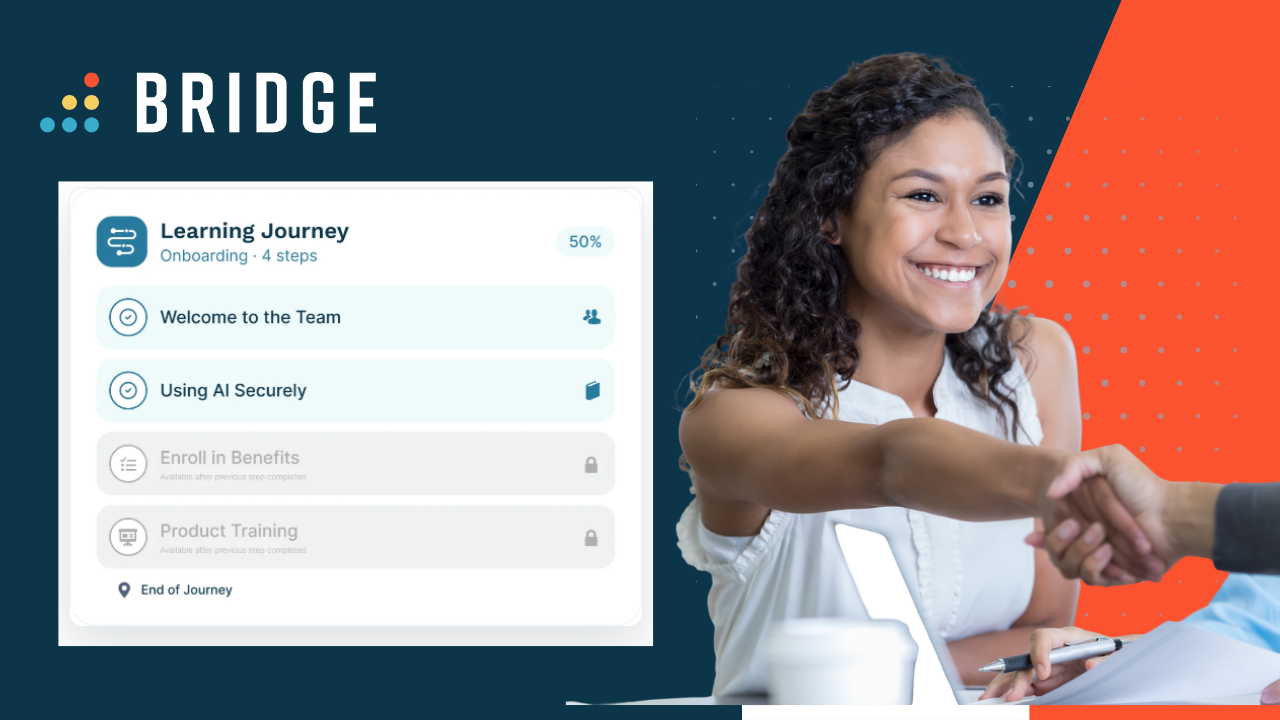
Productivity isn’t about tracking every click or counting hours, it’s about giving employees the clarity, skills, and support they need to do their best work. Bridge helps connect learning, performance, and career development in one place, so employees always know what’s expected, can build the skills to meet evolving demands, and receive meaningful feedback along the way. With AI changing how work gets done, managers need better visibility into progress and skill development. Bridge helps teams align goals, close skill gaps with personalized learning, and foster continuous coaching, creating a culture where productivity is measured by outcomes, growth, and business impact.