Successful learning and performance management for a WFH workforce
In the days of pre-COVID-19 innocence, approximately 62% of those aged 22 to 65 used to work remotely at least occasionally. Between 2010 and early 2020, when coronavirus was something vaguely happening in a city far away called Wuhan, remote working once a week grew by a whopping 400%. Even before coronavirus changed the face of remote work, knowing how to manage remote teams was essential.
Managing remote teams tends to force the same model as working in the office. Yes, we may have learned how to use Zoom, but fundamentally, we’re trying to do work in the same way. A fundamentally different approach is needed.
With 99% of people saying they would choose to work remotely for the rest of their careers if they could, managers need to get a real grip on how to manage a remote team effectively.
The pros and cons of remote working
At the core of taking a conscious approach to the management of remote workers is an honest assessment of the pros and cons of remote working. The goal should be to capitalise on the advantages and introduce strategies to overcome the disadvantages.
Let’s walk through five areas to consider.
1. Employee wellbeing
Research, and common sense, tells us that employee wellbeing impacts individual and organisational performance. The vast majority of people find that remote working reduces their stress.
But there needs to be clarity on this. With remote workers, it is considerably more challenging for the manager to assess and improve an employee’s wellbeing actively. For example, how would a manager know that their remote employee feels that boundaries have blurred and they are struggling with their work-life balance?
2. Employee aspirations
Similarly, it’s hard enough to fully understand an employee’s career aspirations when they are physically sat alongside you, let alone when they are, at best, behind a computer screen.
Again, the statistics are heart-warming. Companies allowing remote work have a 25% lower employee turnover. But that needs to be consciously managed, not accidental.
3. General managerial concerns
Managers do worry about remote working. As well as concerns about apparent things such as productivity, 75% worry about reduced team cohesiveness, 70% worry about maintaining company culture and 65% worry about the impact on their employees’ career. They fear it encourages ePresenteeism.
4. Daily managerial concerns
Despite fantastic tools at their fingertips, it’s hard to feel connected to colleagues when you’re working remotely. For managers, this also translates into a lack of face-to-face supervision. There can be a growing sense that managers and employees are out of touch with one another.
5. Incidental opportunities
It’s incredibly difficult to quantify, but there’s a considerable amount of value-added in the incidental interactions of business life. Informal mentorship that springs up between two colleagues, or impromptu discussions over lunch, these are just a couple of scenarios that are hard to measure but often central to development and progression.
So we need to tackle these situations head-on so that we manage remote teams and bring out the benefits whilst successfully navigating the challenges.
The solution
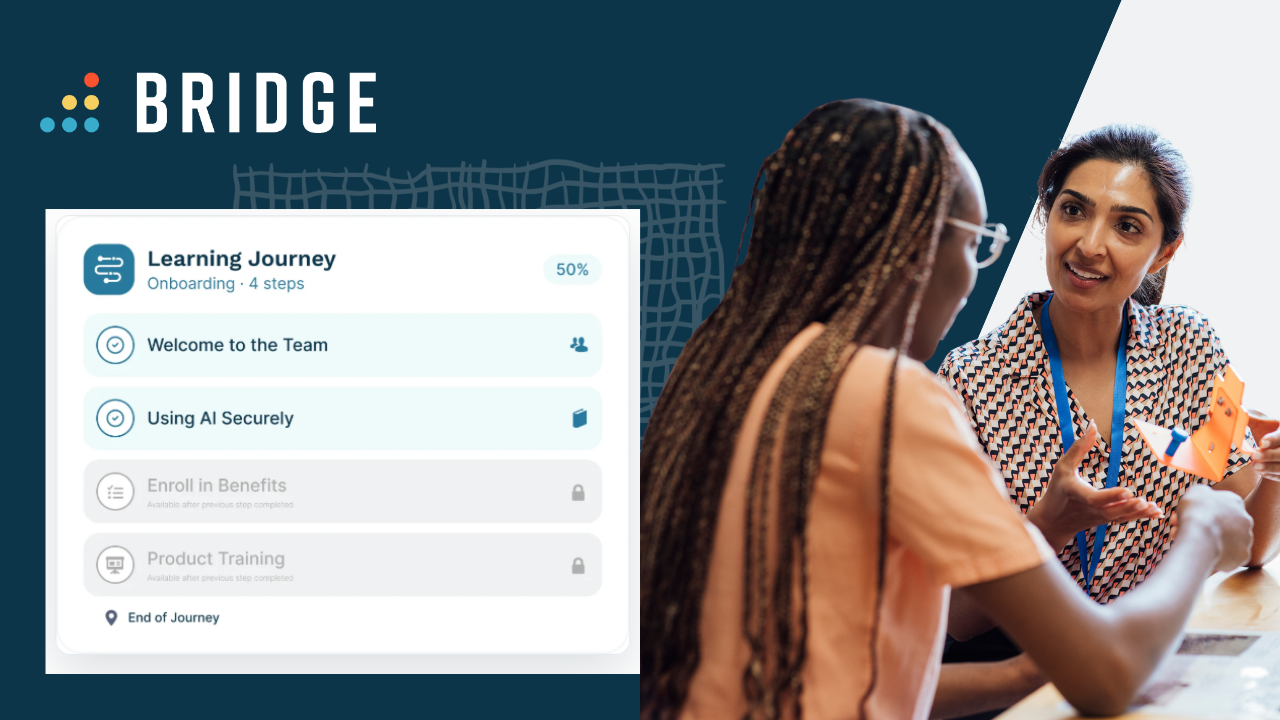
Bridge is a learning management system with in-built performance management. It’s an exceptional tool for managing remote teams.
With a ‘My Team’ dashboard, and in-built organisational charts, fantastic performance metrics and employee connectivity, Bridge makes remote working work. There is a clear view of where an employee is in terms of hopes, aspirations, difficulties and performance as well as where they want to be, and what the organisation needs for the future. With easy performance conversations, check-ins, and solutions within the platform, it makes remote managing teams a conscious act.
Bridge enables an intentional approach to remote working, allowing everything from maintaining the organisational culture through to understanding how the employee feels about their work-life balance. Bridge is about managing, not just surviving remote teams.